
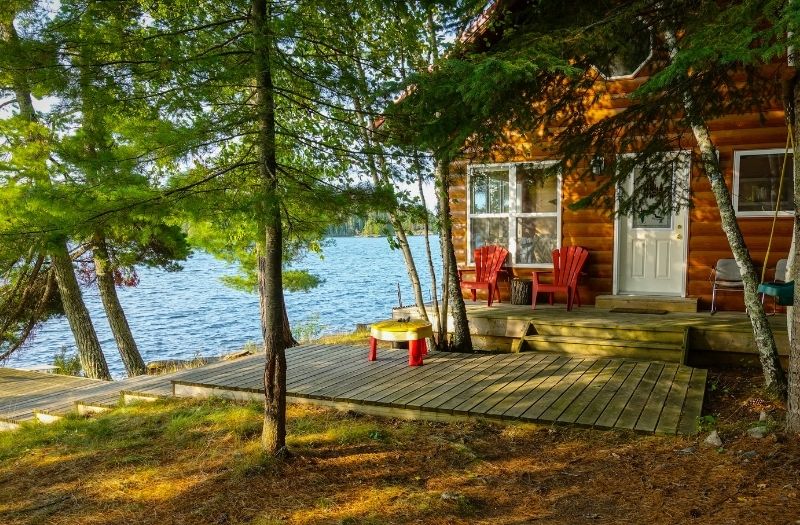
You’ve been scrolling listings for weeks. Some say “seasonal.” Some say “year-round.” A few say “four-season.” They look similar in the photos, but they’re not the same purchase, and choosing the wrong one is an expensive mistake to undo.
A seasonal cabin near Detroit Lakes is built for warm-weather use. It typically lacks full insulation, has water and septic systems that don’t handle Minnesota winters, and often sits on a road that isn’t plowed from December through March. A year-round lake home is built for continuous occupancy: four-season heating, insulated construction, permanent utility connections, and a plowed road to the property.
The difference between the two affects how you can finance the purchase, how much you pay in taxes, whether your insurance will cover a claim, and how easy the property will be to sell someday. The label in the listing matters a lot more than most buyers realize.
At Action Realty, we work with buyers across all the lakes surrounding Detroit Lakes, and this is one of the first things we help people sort out.
Financing: The Surprise Most Buyers Hit at the Wrong Moment
FHA, VA, and USDA loans generally require year-round habitability. That means they’re off the table for most seasonal cabins. Conventional second-home loans can work for either property type, but seasonal and recreational properties typically require a 20 to 25 percent down payment versus as little as 3.5 percent down for a year-round home using FHA.
We’ve had buyers get pre-approved, fall in love with a cabin on the lake, and then find out at the appraisal stage that the property’s seasonal classification changed the terms of their financing. It’s a sucker punch you don’t want to take in the middle of a transaction.
Before you tour any specific property, ask your lender one question: “Will this classify as a seasonal cabin, or is it a year-round home?” That answer shapes everything else.
Property Taxes: The Classification Most Buyers Learn About Too Late
Minnesota treats these two property types differently on your tax bill. A year-round home used as a primary residence qualifies for homestead classification, which includes a market value exclusion that reduces what you’re taxed on by up to roughly $38,000.
A seasonal cabin falls under the 4c noncommercial seasonal recreational classification. That comes with a 1.0 percent class rate on the first $500,000 of assessed value, and it’s subject to the state general tax — a levy that doesn’t apply to homesteads. The practical effect is that a seasonal cabin at the same assessed value as a year-round homestead can carry a meaningfully higher tax burden once you run the full comparison.
Before you close, verify the current classification with the Becker County Assessor. The number in the listing may not reflect what you’ll actually pay.
Insurance: The Coverage Gap Is Bigger Than You’d Expect
Seasonal policies typically include vacancy clauses — coverage restrictions that activate when a property sits unoccupied past a certain number of days. They also frequently exclude freeze damage if the property wasn’t properly winterized before winter came in.
Year-round policies don’t carry those same restrictions for routine absence, and freeze coverage is included as long as you maintain minimum heat. If you plan to rent the property on Airbnb or VRBO, a standard homeowner’s policy almost certainly won’t cover commercial rental activity, regardless of property type. Get a separate quote for that coverage before you close.
What Ownership Actually Looks Like, Season by Season
A seasonal cabin has a concentrated rhythm: open it in May, use it hard through August, close it in October. Then drain the lines, shut off the well, pull the dock, seal against rodents. Professional winterization runs $300 to $1,500 annually. Dock installation and removal service adds another $300 to $1,200 per season, depending on the size of your dock and who you hire.
A year-round lake home spreads the work across the calendar: heating fuel monitoring, snow removal, ice dam prevention, winter road maintenance. There’s no closing ritual, but there’s also no long stretch where the property takes care of itself.
One thing we always ask buyers who are looking at properties on seasonal roads: “Would you be comfortable if this road wasn’t plowed from December through March?” For some buyers, that’s actually the appeal — total winter solitude. For others, that one question changes the entire search.
Can You Convert a Seasonal Cabin to Year-Round?
Yes, but it’s not a renovation. Conversion triggers Minnesota State Building Code compliance: full insulation, heating, plumbing, and egress upgrades, plus a septic review through Becker County Environmental Services. You’ll need licensed contractors and inspections at each stage.
Budget realistically. A basic conversion can run $30,000 on the low end. Depending on the structure’s starting condition — especially older cabins with minimal insulation and undersized septic systems — it can go well over $100,000. Every year buyers discover that the cabin they planned to upgrade turned into a much bigger project than expected.
Common Questions About Seasonal vs. Year-Round Properties
Can you live year-round in a seasonal cabin near Detroit Lakes?
Technically yes, after upgrades. But it typically requires permits, insulation work, heating upgrades, and a septic review under Minnesota State Building Code. It’s a real project with real costs, not a simple fix.
What’s the property tax difference in Becker County?
Year-round primary residences qualify for homestead classification and a market value exclusion. Seasonal cabins fall under the 4c seasonal recreational classification, subject to the state general tax with no homestead exclusion. Verify the current classification with the Becker County Assessor before closing.
Can I get a regular mortgage on a seasonal cabin?
FHA, VA, and USDA loans require year-round habitability and generally won’t work for seasonal properties. Conventional second-home loans may qualify, but expect a 20 to 25 percent down payment and stricter standards.
What does it cost to winterize a lake cabin in Minnesota?
Professional winterization runs $300 to $1,500 per year, depending on the property. Add dock installation and removal service at $300 to $1,200 per season.
What’s the resale difference between a seasonal cabin and a year-round home?
Year-round properties reach a broader buyer pool — accessible to FHA, VA, and conventional buyers alike. Seasonal cabins are limited to cash buyers and conventional borrowers who can meet the higher down payment. In a slow market, that smaller pool can mean a longer wait and less negotiating power when you’re ready to sell.
Now That You Know the Difference — What’s Right for You?
Understanding how these two property types differ is the first step. The second step is figuring out which one actually fits your life: how you’ll use it, how you’ll finance it, and what the lakes near Detroit Lakes can offer you.
Our team has helped buyers work through this decision across every major lake in Becker County. Contact Action Realty for a breakdown of the area’s lakes and figure out which area and property type is right for you.
No pressure either way. Most buyers find that one conversation is worth more than another week of searching on their own.